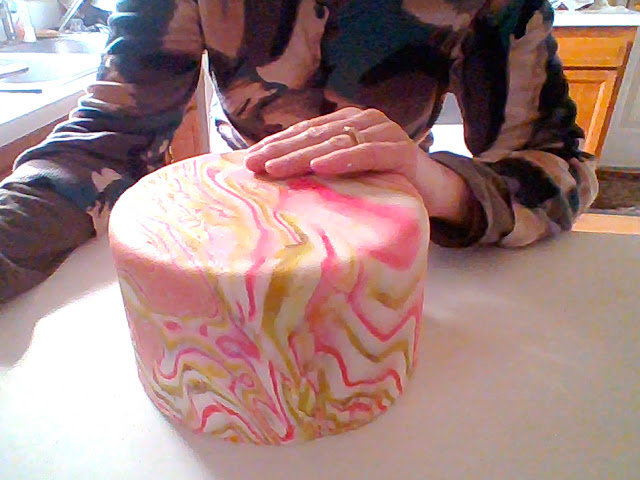
4 Kinds of Fondant For Cake Decorating: Know the Difference!
Psy 103 Learning Process Access
Where information is stored for future retrieval.
Through "modeling," individuals watch the actions of others and the resulting consequences. This involves four key steps: (noticing the behavior), retention (remembering it), reproduction (performing it), and motivation (having a reason to do it). This theory explains how culture, language, and social norms are passed down through generations. 4. Factors Influencing the Process Psy 103 Learning Process
At its core, the study of learning seeks to answer one fundamental question: How do we change? While early philosophers debated whether knowledge was innate or learned, modern psychology provides a structured framework through three dominant lenses: Behaviorism, Cognitive Theory, and Social Learning. 1. The Behavioral Perspective: Conditioning Where information is stored for future retrieval
Encoding strategies—such as , elaboration , and organization —determine how effectively a person moves information into long-term storage. Unlike conditioning, cognitive learning emphasizes understanding, problem-solving, and the "aha!" moment of insight. 3. Social Learning: Observation and Imitation This theory explains how culture, language, and social
The learning process is a multifaceted interaction between our environment, our biology, and our internal mental states. Whether it is the involuntary association of a childhood scent or the deliberate effort of mastering a complex mathematical formula, learning is the mechanism that allows us to adapt to an ever-changing world. By understanding these psychological pillars, we can better design educational systems and personal habits that align with how our brains naturally function.