
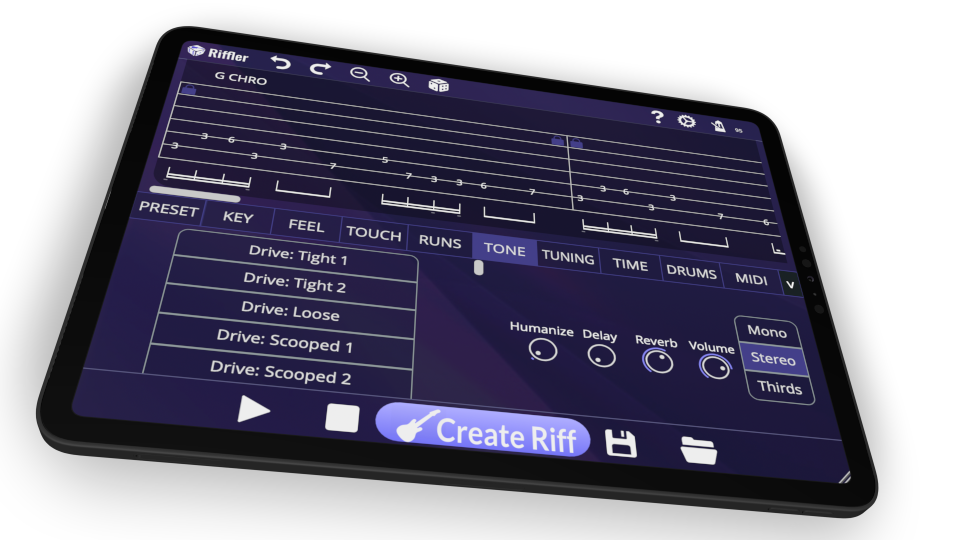
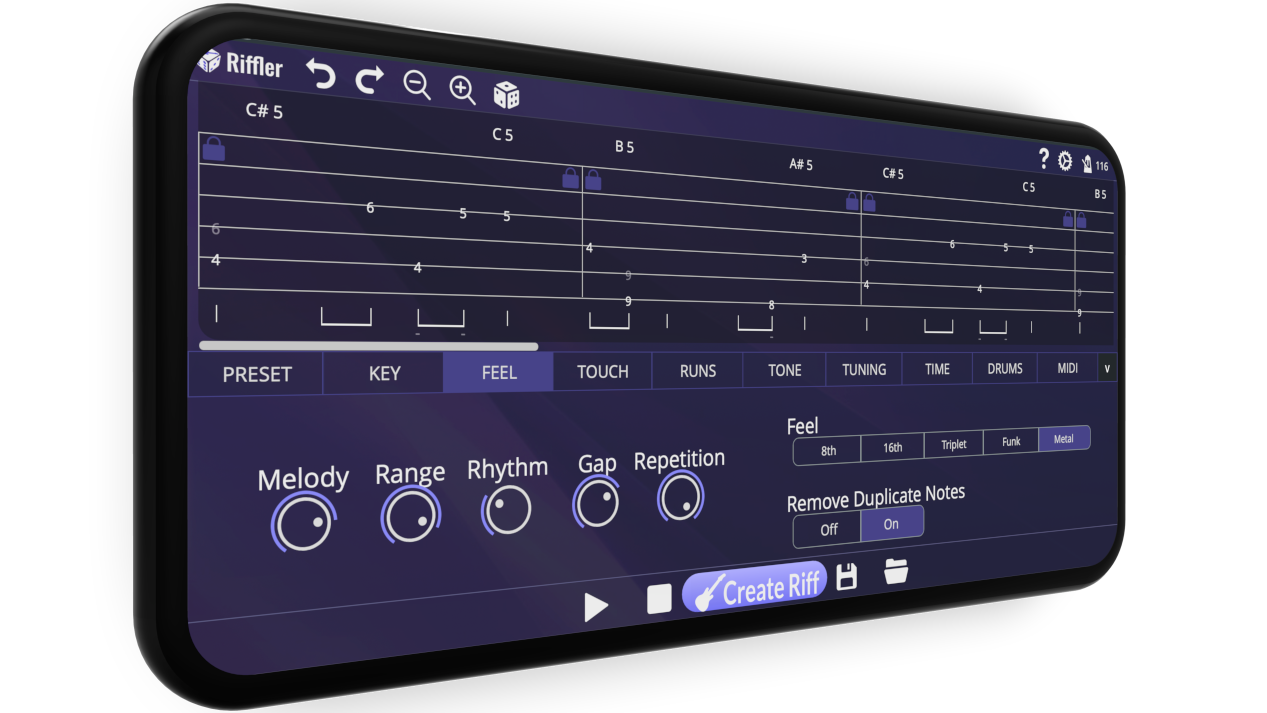
Riffler creates unique, copyright-free guitar riffs instantly. There are a huge range of preset styles, whilst advanced users can explore a wide range of customization options to fine-tune their sound. Riffs can be exported as an audio* or MIDI file and, as Riffler is a VST* and AUv3* plugin, it can be used as a standalone app or inside a host DAW*.
*Not currently on Android.



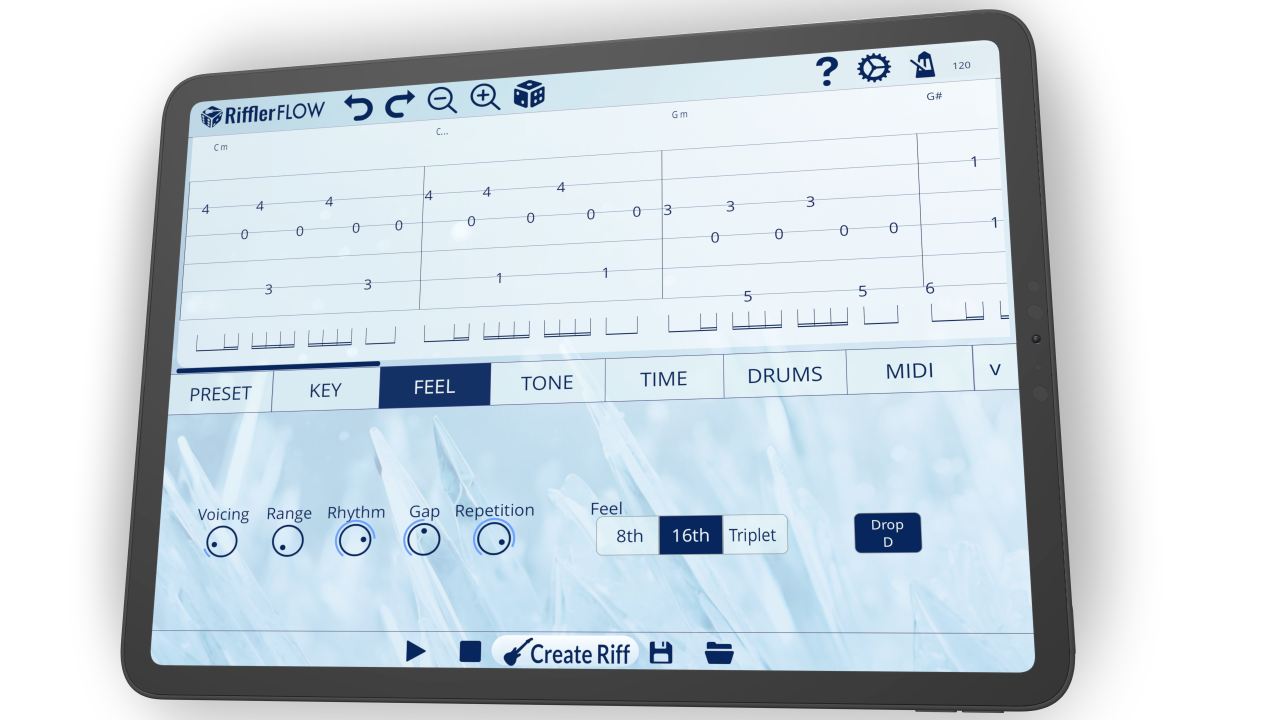
The original Riffler was perfect for instantly making heavy, distorted, scale based riffs. Riffler Flow is a brand new app that instantly generates softer, clean, arpeggio based riffs at the press of a button. Perfect for rock, hip-hop, EDM and more, Riffler Flow includes the same great features as the original Riffler including audio and MIDI export and the ability be used as an AUv3 inside a host DAW.
In the modern landscape, crowd buying has evolved from standalone daily-deal sites into integrated social shopping features. Large-scale e-commerce players like Pinduoduo in China have refined the model by weaving it into the fabric of everyday social messaging, allowing friends to form permanent "buying hubs." This evolution suggests that while the initial hype of daily coupon sites has cooled, the underlying principle remains robust. By merging social connectivity with bulk purchasing power, crowd buying continues to democratize the economy of scale, proving that in the digital age, there is true financial strength in numbers.
The primary appeal of crowd buying lies in its psychological and economic incentives. For consumers, it offers a gamified shopping experience characterized by urgency and exclusivity. The "tipping point" mechanism—where a deal expires if the minimum participant threshold isn't met—creates a sense of community mission, encouraging users to share deals via social media to ensure the discount is unlocked. For small businesses, these sites serve as aggressive marketing engines. Rather than spending upfront on traditional advertising, a local restaurant or boutique can offer a deep discount to guarantee a massive influx of new foot traffic, essentially treating the lost margin as a customer acquisition cost. crowd buying sites
Crowd buying sites, often called group-buying or social commerce platforms, revolutionized how consumers interact with the digital marketplace by leveraging the collective power of the "crowd" to secure steep discounts. Popularized by pioneers like Groupon and LivingSocial in the late 2000s, these platforms operate on a simple economic premise: a deal only becomes active once a predetermined number of people commit to the purchase. This model transforms individual shoppers into a unified bargaining unit, allowing them to access wholesale-level pricing that would otherwise be reserved for large-scale corporate entities. In the modern landscape, crowd buying has evolved
However, the rapid ascent of the crowd-buying industry eventually met significant structural challenges. While the model excels at driving high volumes of initial traffic, it often struggles with sustainability. Many businesses found that "deal seekers" were unlikely to return at full price, leading to one-time transactions that didn't build long-term loyalty. Additionally, the sheer volume of customers generated by a successful campaign could overwhelm a small staff, resulting in poor service and brand dilution. Merchants often faced "deal fatigue," where the 50% discount required by the platform, combined with the platform’s own commission, left the business with little to no profit. The primary appeal of crowd buying lies in